

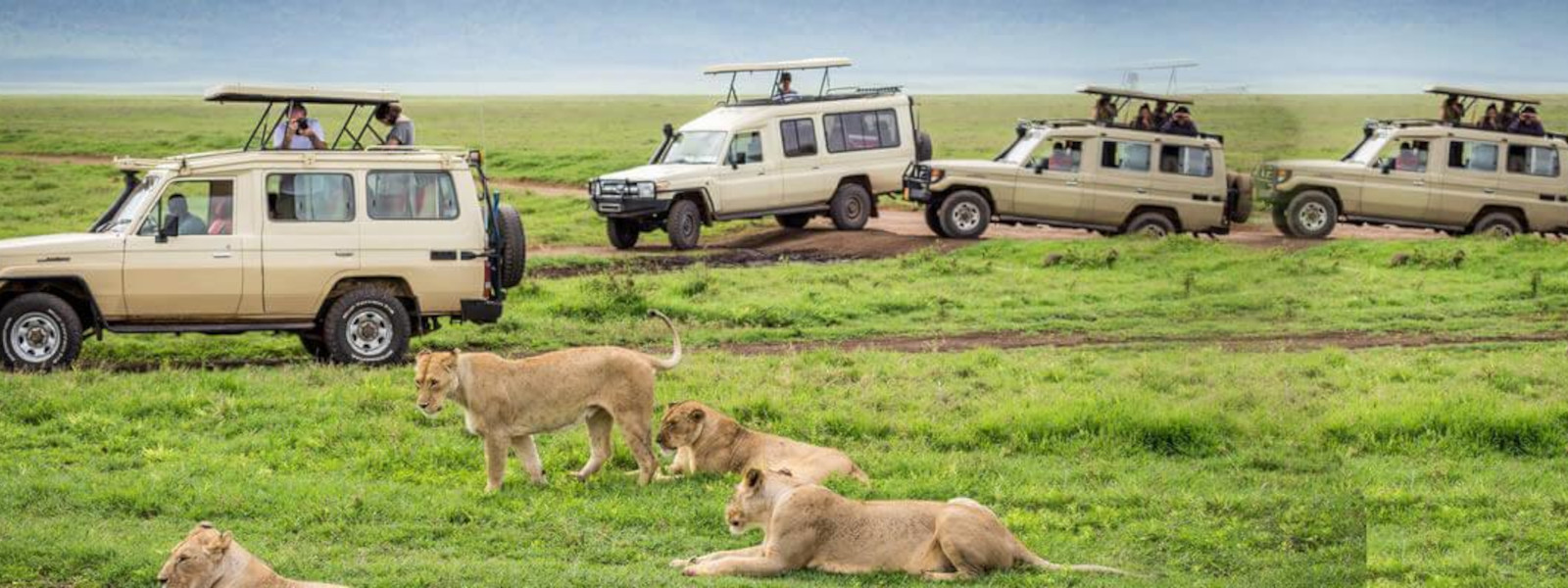
Tanzania Northern Circuit Complete Self-Drive Itinerary: Serengeti, Ngorongoro, Tarangire and Lake Manyara
Tanzania’s northern circuit self-drive itinerary covers the most wildlife-dense national park combination in Africa — four parks within a four-hour drive of Arusha that together deliver the Serengeti’s Great Migration, the Ngorongoro Crater’s contained Big Five concentration, Tarangire’s dry-season elephant gathering of over 3,000 animals, and Lake Manyara’s tree-climbing lion and lake shore flamingo. The Tanzania northern circuit self-drive is the Africa safari benchmark experience that every visitor comes to East Africa to complete. No other combination of parks on the continent delivers the species variety, encounter quality, and ecosystem diversity of the 4-park Tanzania northern circuit within a single 8 to 10 day driving itinerary. This guide covers the parks in detail, the optimal driving sequence, the TANAPA pre-payment system, campsite logistics for each park, and the specific differences between migration and non-migration season timing.The Four Parks: What Each One Delivers
Tarangire National Park (2,850 km2): Tarangire’s defining feature is the dry-season elephant concentration — the Tarangire River is the only permanent water source in a vast ecosystem that dries out from June to October, concentrating every water-dependent species in a progressively narrowing zone along the river bank. At peak concentration in August and September, over 3,000 elephants use the Tarangire River within the park boundary, forming the largest single-ecosystem elephant gathering in East Africa during the dry season. The elephant herds — including breeding groups of 40 to 80 animals, bachelor bull clusters, and old solitary bulls — create a river-edge game drive of extraordinary quality. The flanking Acacia-Commiphora woodland holds a year-round resident predator community: lion in prides along the river corridor, leopard in the larger Acacia trees, cheetah on the open grassland sections east of the river, wild dog (a resident pack uses the southern park), and the full plains game community of zebra, wildebeest, buffalo, impala, fringe-eared oryx, gerenuks, and lesser kudu. Tarangire also holds the most baobab-dense wildlife habitat in Tanzania — the iconic Adansonia digitata trees of the Tarangire plateau are a landscape feature unlike anything in the Serengeti or Ngorongoro. The bird list of 550 species includes several Tanzania endemics: the Tarangire’s signature yellow-collared lovebird, the ashy starling, the rufous-tailed weaver, and Donaldson-Smith’s sparrow weaver are all reliably found on a single circuit morning. Lake Manyara National Park (330 km2): Manyara is a compact but ecologically complex park whose most famous feature — the tree-climbing lion — occurs nowhere else in Africa with consistent reliability. Manyara’s prides (approximately 30 to 50 lions across 4 to 6 prides) routinely climb and rest in the horizontal branches of large Acacia tortilis and fig trees, a behaviour that researchers attribute to the dense fly and insect pressure at ground level in the groundwater forest section, the elevated vantage point for spotting approaching prey, and the possibility of thermoregulation advantage. The tree lion behaviour is not guaranteed on any single visit, but the groundwater forest circuit (the first 3 km of park after the gate) from 6 am to 9 am is the highest-probability encounter window. Manyara’s alkaline lake shore holds one of Kenya-Tanzania’s more accessible flamingo aggregations (up to 100,000 lesser flamingo when alkalinity conditions are optimal), alongside the hippo pool section’s 200 to 300 hippo and the large crocodile population in the Mto wa Mbu river channels. The elephant in Manyara’s groundwater forest are among the most habituated to vehicle presence in Tanzania — encounters at 5 to 15 metres on the narrow forest road are routine. Ngorongoro Conservation Area (Crater descent): The Ngorongoro Crater’s 260 km2 floor is the single most wildlife-dense enclosed ecosystem on Earth at this scale. The crater’s walls prevent lion from ranging outside (except for occasional young males that climb out), creating an insular big cat population of extraordinary density — 60 lion in 260 km2 equals 1 lion per 4.3 km2, far higher than any open-range park. The crater floor’s 25,000 wildebeest and 4,000 zebra are resident year-round (unlike the Serengeti migration animals, these do not leave the crater in any season) — providing the lion, hyena, and cheetah with a reliable prey base throughout tPlanning your East Africa self-drive circuit? Car Hire 4×4 Drive provides fully-equipped 4×4 vehicles for Uganda, Kenya, Tanzania, and Rwanda with COMESA insurance and cross-border documentation included. See how the booking process works or send a circuit enquiry for a quote within 24 hours.
he year. Black rhinoceros: 60 to 70 black rhino in the Lerai Forest and the open grassland sections around the Mandusi hippo pool — the most accessible black rhino encounter in Tanzania, with sightings on most crater circuits where the ranger knows the morning location from the pre-dawn monitoring. Elephant: approximately 200 elephant in the crater, including the largest-tusked bulls in Tanzania (old males with tusks reaching the ground — a body type that was far more common before 20th-century ivory poaching). Flamingo: the alkaline Magadi lake at the crater’s centre holds 10,000 to 500,000 flamingo depending on the water level and Spirulina bloom cycle. Serengeti National Park (14,763 km2): The Serengeti needs no elaborate introduction — it is Africa’s most famous national park and one of the world’s last intact large mammal ecosystems. The park’s Seronera Valley (central Serengeti) is the permanent wildlife zone that remains productive year-round regardless of where the migration wildebeest currently are. The Seronera River’s permanent water sustains one of Africa’s highest lion densities in a non-crater setting — 9 to 12 prides overlapping the valley, totalling 80 to 100 lion visible from the main circuit tracks. The Seronera River’s fig tree corridor is the highest-probability leopard encounter zone in the Serengeti — resident leopard use the horizontal branches of the riverine figs as day-resting positions and are located by the ranger community’s informal observation network that is accessible by asking at the Seronera Visitor Centre in the morning. Cheetah on the central and southern plains: the Serengeti is Africa’s best cheetah ecosystem with approximately 1,000 cheetah in the ecosystem, the world’s largest single-country population.Optimal 8-Day Driving Sequence
Day 1: Arusha arrival → Tarangire gate (120 km south-west, 2 hours) → afternoon circuit. Overnight Tarangire campsite. Day 2: Full day Tarangire — dawn elephant river circuit and afternoon baobab plains. Overnight Tarangire. Day 3: Drive Tarangire to Manyara gate (110 km, 1.5 hours) → enter Manyara for full day circuit — forest tree lion morning, hippo pool and lake shore afternoon. Overnight Mto wa Mbu guesthouse or Manyara campsite. Day 4: Short morning Manyara circuit → drive to Ngorongoro Lodoare gate (75 km, 1.5 hours) → Highlands rim road → overnight Simba Campsite on the crater rim at 2,300 m (pack warm sleeping gear — rim temperatures drop to 5 to 8 degrees at night). Day 5: Crater descent at 6 am → full day on the crater floor (6 am to 4 pm, back on rim by 6 pm) → overnight Simba Campsite rim. Day 6: Drive Ngorongoro to Serengeti via Naabi Hill (75 km from rim, 1.5 hours transit drive) → enter Serengeti at Naabi Hill → drive north-west to Seronera (60 km, 1 hour from Naabi, with game drive stops) → afternoon Seronera Valley circuit. Overnight Seronera campsite. Day 7: Full day Seronera Valley — dawn circuit for active predators, midday leopard scan at the fig trees, afternoon circuit. Overnight Seronera campsite. Day 8: Morning circuit → exit Serengeti at Naabi Hill → drive to Arusha via Ngorongoro transit (280 km, 4.5 hours). Total circuit: approximately 1,100 km on driveable murram and tarmac roads.TANAPA Pre-Payment System
All Tanzania national park and conservation area fees are paid exclusively through the TANAPA online portal at tanzaniaparks.go.tz — no cash is accepted at any gate. Create an account using a passport number and vehicle registration plate, select the parks and dates, and pay by international credit or debit card. The system generates a QR code confirmation that must be presented at the gate on arrival. Complete registration and payment at minimum 48 hours before the first gate entry as QR code generation requires processing time. Estimated total fees for 2 adults on an 8-day 4-park circuit: Tarangire 2 days (USD 116 per person + USD 40 vehicle per day), Manyara 1 day (USD 45 per person + USD 40 vehicle), Ngorongoro 1 crater descent day (USD 80 per person + USD 40 vehicle + USD 350 crater service fee per vehicle), Serengeti 3 days (USD 60 per person per day + USD 40 vehicle per day) — total approximately USD 1,400 to USD 1,600 in park fees for 2 adults. The Serengeti public campsites (Seronera and Simba at Ngorongoro rim) are booked through the same TANAPA portal — book the campsites at the same time as park entry fees as they fill months in advance for July to October dates. See our Tanzania northern circuit planning resources or book your Tanzania 8-day self-drive circuit vehicle.Frequently Asked Questions
Do I need 4WD for a self-drive safari in East Africa?
4WD is essential for any circuit that includes the Ngorongoro Crater descent (which requires centre differential lock), the Bwindi Impenetrable approach road in wet season, or Kidepo Valley National Park. For circuits that stay on sealed national highways and well-maintained murram roads in dry season, a capable 2WD vehicle can manage — but the Toyota Land Cruiser V8 GX with full 4WD and diff lock is always the safest and most reliable choice for any East Africa circuit.
What documents do I need to drive across East Africa borders?
You need the COMESA Yellow Card insurance certificate (valid for all East Africa Community member states), a cross-border authority letter from the vehicle owner for each transit country, and the vehicle registration document. Car Hire 4×4 Drive prepares all cross-border documentation for the specific countries on your circuit as part of the standard hire process — no separate arrangement needed.
Can I self-drive in East Africa without previous off-road experience?
Yes. Most East Africa self-drive circuits do not require technical off-road skills — the majority of the driving is on sealed national highways or well-maintained murram park roads. The vehicle handover at collection includes a full demonstration of the 4WD system. If your circuit includes genuinely technical sections (Ngorongoro crater descent, Bwindi wet-season approach), consider a car with driver for those sections if you have no prior 4WD experience.
How far in advance should I book my East Africa self-drive vehicle?
Book 4 to 8 weeks in advance for standard circuits. For July–August peak season (wildebeest migration) and December–January, book 3 to 4 months ahead. Rwanda gorilla permits should be booked 3 to 9 months in advance via the RDB portal; Uganda gorilla permits (Bwindi) should be booked 2 to 6 months ahead via UWA. See the full FAQ and the How It Works page for the complete booking process.
Which vehicle is best for a multi-country East Africa circuit?
The Toyota Land Cruiser V8 GX is the standard recommendation for any circuit covering two or more countries, or any circuit that includes Tanzania (Ngorongoro is mandatory 4WD with diff lock) or Uganda’s challenging approach roads (Bwindi, Kidepo). For Kenya-only or Rwanda-only dry-season circuits, the Land Cruiser Prado is a cost-effective alternative. For groups of 6 or more passengers, the Toyota Hiace 9-seater safari van with pop-up roof is the most cost-effective per-person option.

 Do you believe in Road trips?