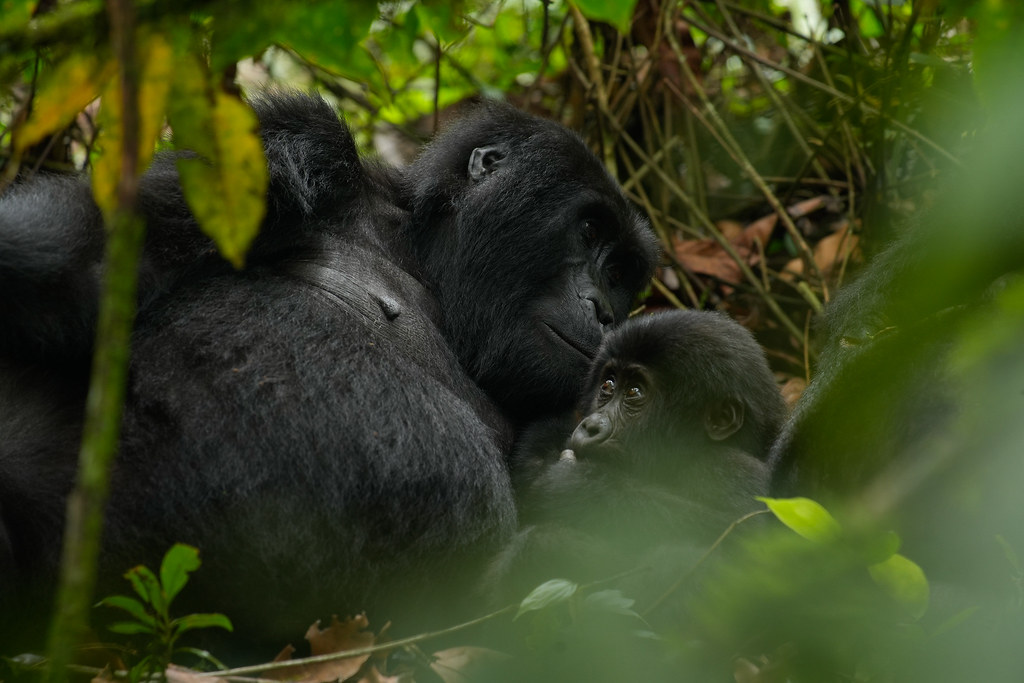

Bwindi Impenetrable Forest National Park is the most important destination on Uganda's self-drive safari circuit — home to over 400 individual mountain gorillas organised into 19 habituated gorilla family groups approved for trekking by Uganda Wildlife Authority. A mountain gorilla trek at Bwindi is a once-in-a-lifetime wildlife experience that cannot be replicated in any other format: you walk through the dense montane forest with UWA park rangers and guides until the gorilla family is located, then spend one hour at close range observing the family's social behaviour — silverbacks resting in the undergrowth, infants playing in the tree branches, mothers nursing, sub-adults mock-charging the group and retreating.
No other wildlife encounter in East Africa consistently produces this combination of proximity and observable complex behaviour. This page covers the self-drive approach to Bwindi, the UWA permit system, the specific driving conditions at each trekking sector, and the vehicle required for each approach route.
UWA Mountain Gorilla Trek Permits
Uganda Wildlife Authority mountain gorilla trek permits are required for every individual trekking at Bwindi. The permit costs USD 800 per person per trek, which includes one allocated gorilla family group, one UWA guide, UWA tracking rangers who locate the gorillas before the trekking group departs, and one hour of observation time at the gorilla family.
Permits must be booked and paid in advance through the UWA online portal at ugandawildlife.org. Each habituated gorilla family at Bwindi receives a maximum of eight visitors per trekking day, and the most accessible sectors (Buhoma and Rushaga) have the highest demand. For dry season months of June to September and December to January, permits at Buhoma sector typically sell out 3 to 6 months in advance.
Visitors planning a Bwindi self-drive circuit should book the UWA permit first and plan the vehicle hire dates around the permit date. The permit receipt must be printed and carried in the vehicle, as a digital permit on a phone screen is not always accepted at the Bwindi park gate.
The specific trekking sector allocated with the permit matters for the self-drive visitor because each sector has a different approach road with different driving requirements. Bwindi has four trekking sectors: Buhoma in the north (the most established sector, accessed via the Kabale-to-Buhoma approach road), Ruhija in the north-east (a high-altitude sector approached via Kabale and the Ruhija road), Rushaga in the south (approached via Kisoro town, the sector with the most habituated gorilla families), and Nkuringo in the south-west (also approached via Kisoro, with the most demanding approach road of all four sectors). When booking via UWA, visitors can specify a preferred sector and UWA will do its best to accommodate the preference. For self-drive visitors, specifying Buhoma or Ruhija simplifies the approach logistics and avoids the most demanding access roads.
Buhoma Sector: The Approach Road
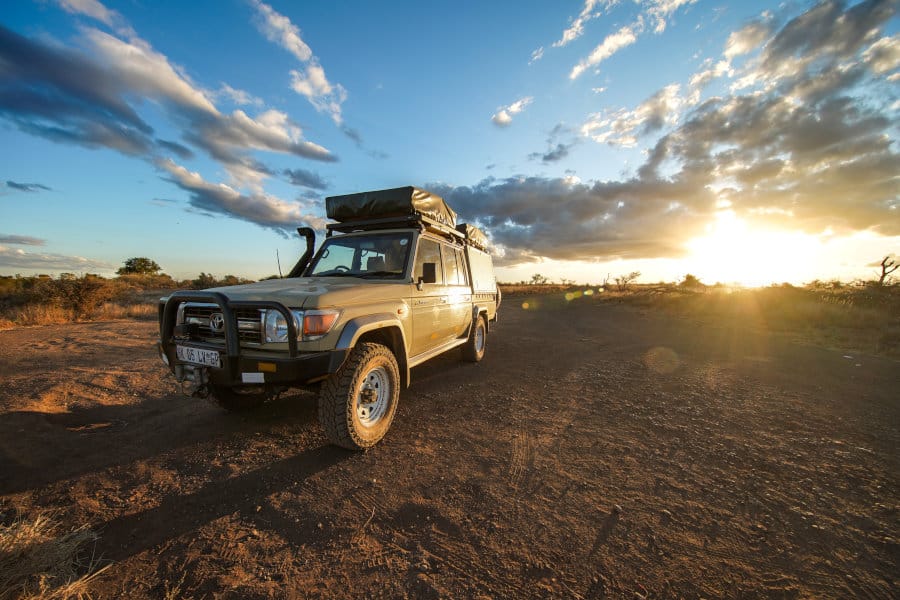
The Buhoma sector approach road is the most frequently driven Bwindi access route for self-drive visitors. From Kabale town (270 kilometres south-west of Kampala, approximately 5 hours on the A109 highway), the road to Buhoma runs 43 kilometres north-west on unsealed laterite murram. In the dry season (June to September, December to January), the laterite dries to a firm compacted surface with rut depths typically under 100 millimetres and gradient sections that the Toyota Prado handles in 4WD low range without difficulty.
The drive takes approximately 1.5 to 2 hours in dry season. In the wet season (March to May long rains, October to November short rains), the same road becomes a deeply rutted clay surface with sections of standing water, rut depths of 200 to 350 millimetres on the steepest sections, and lateral camber on the hillside sections that requires careful track positioning.
The wet-season Buhoma approach requires the Land Cruiser V8 or Nissan Patrol with centre differential lock engaged in 4WD low range for the steepest sections. In the wet season, the drive takes 2.5 to 3.5 hours. Visitors who have booked permits at Buhoma in the wet season should allow an extra buffer day on either side of the trek date in case road conditions make departure or return more difficult than expected.
Nkuringo Sector: The Most Demanding Approach
The Nkuringo trekking sector is accessed via Kisoro town (345 kilometres from Entebbe, approximately 6.5 hours south-west) and a secondary approach road that descends approximately 250 metres from the plateau rim to the Nkuringo community camp and the UWA gate. The descent track is narrow, with switchback sections at gradients of 18 to 22 percent, and the surface is compacted gravel over clay that becomes loose and extremely slippery in wet conditions.
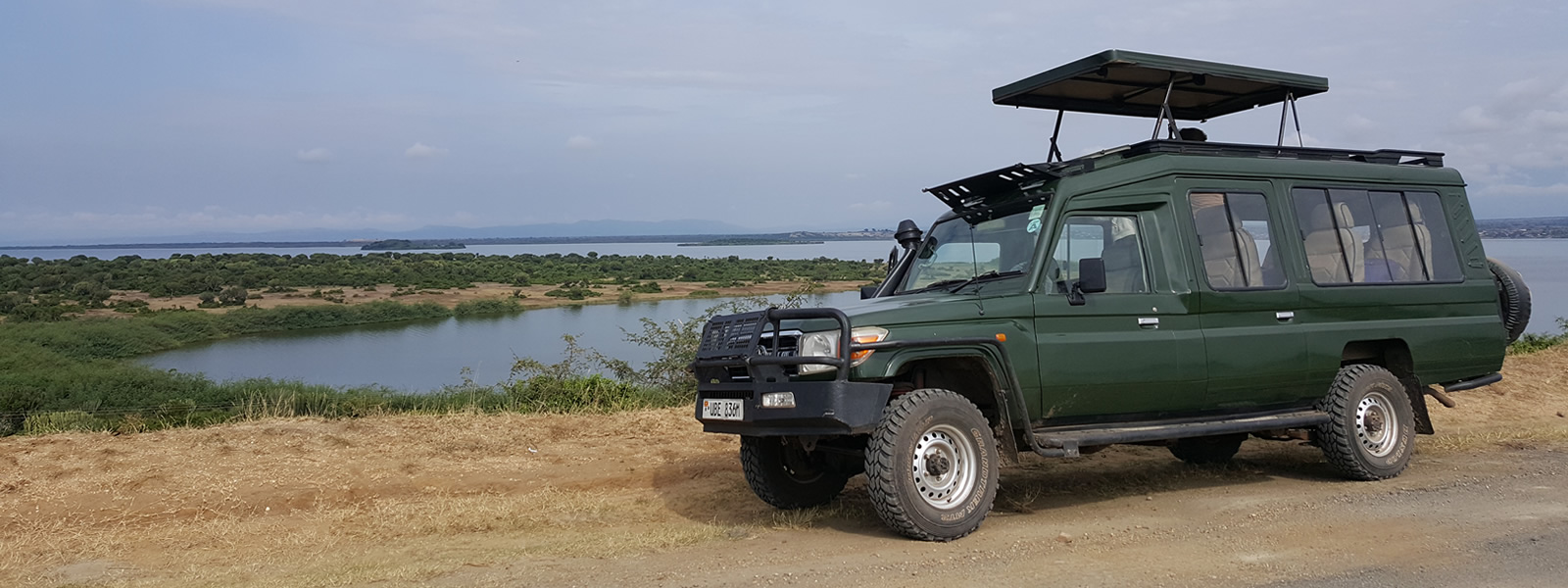
This descent requires the Land Cruiser V8 in any season — the combination of steep gradient, tight turning radius on the switchbacks, and the drop-offs adjacent to the track make the V8's engine braking in 4WD low range significantly safer. The return ascent is equally demanding. For any visitor with a Nkuringo sector permit, the Land Cruiser V8 is mandatory.
To view the full vehicle fleet, including V8 specifications, visit the vehicles overview page. For vehicle collection from Entebbe or Kampala, see the Uganda car rental page.
Combining Bwindi with Chimpanzee Tracking at Kibale
The most frequently requested Uganda primate circuit combines mountain gorilla trekking at Bwindi with chimpanzee tracking at Kibale Forest National Park — providing the visitor with East Africa's two most distinctive primate experiences on a single 9 to 12 day circuit. Kibale Forest is 90 kilometres north of Queen Elizabeth National Park and 155 kilometres north-west of Kampala, positioned on the western Uganda circuit between Queen Elizabeth and Bwindi.
Kibale's chimpanzee tracking departs at 8 am daily — a UWA guide leads a group of up to six visitors through the forest to locate the habituated chimpanzee community. Kibale is also the site of the Bigodi Wetland Sanctuary, a community conservation area 6 kilometres from the main park entrance that is home to the rare Ugandan mangabey, black-and-white colobus monkey, red-tailed monkey, and L'Hoest's monkey.
A walking guide through the Bigodi swamp edge provides encounters with these species in a community-managed wildlife environment. The combination of Bwindi gorilla trekking and Kibale chimpanzee tracking constitutes the Uganda primate double and is the most popular Uganda circuit among repeat East Africa visitors. Permit booking for both Bwindi gorilla trekking and Kibale chimpanzee tracking is through the UWA online system at ugandawildlife.org, and both permit types should be secured before booking vehicle hire dates, as the permits determine the circuit timing.
Accommodation Near Bwindi and Departure Logistics
Accommodation in the Bwindi area spans a wide range, from the Uganda Wildlife Authority bandas and self-catering cottages at the park entrance to luxury tented camps and lodges in the forest edge above Buhoma and at Nkuringo. Self-drive visitors who plan to cook or carry packed meals find the UWA bandas at Buhoma the most practical option — the banda compound is at the trek assembly point, eliminating any morning drive to the gate.
The gorilla trek briefing at Buhoma gate is at 7:30 am, and late-arriving trekkers risk losing their allocated family group to the standby list. Any accommodation more than 10 minutes from the trek assembly point requires an appropriately early departure, which the accommodation should be informed about at check-in. The typical Bwindi self-drive circuit from Entebbe is 2 nights minimum (drive in, trek day, drive out) to 3 nights (drive in, rest day, trek day, drive out).
Combining Bwindi with the Uganda-Rwanda cross-border gorilla circuit is the most popular multi-country combination — trekking at Bwindi on the Uganda side and then crossing into Rwanda at Katuna-Gatuna for a Volcanoes National Park gorilla trek. The Katuna border crossing is 14 kilometres south of Kabale and the drive from Buhoma to Katuna is approximately 50 kilometres, allowing a same-day crossing after the Bwindi trek.
See the Uganda practical information page for permit booking details and the book now page to enquire about vehicle availability.
What to Expect During the Mountain Gorilla Trek
The mountain gorilla trek at Bwindi is unlike any other guided wildlife experience in East Africa because the encounter itself is not pre-determined in terms of location or distance walked to reach the gorillas. The tracking rangers who locate the gorilla family before the trekking group departs may already know the family's location from the previous evening, in which case the walk to reach the gorillas might be 20 minutes to an hour of relatively gentle forest trail walking.
Alternatively, if the family has moved overnight to a less accessible part of their range, the approach walk may require 2 to 4 hours of navigating steep, dense montane forest with thick understorey vegetation and significant elevation changes. Trekking poles (available to borrow or rent at the Buhoma reception) are strongly recommended, and comfortable, waterproof walking boots with ankle support are the most important equipment item.
Once the gorilla family is located, the one-hour observation period begins — a timer is monitored by the UWA guide, and the group must leave after 60 minutes regardless of the behaviour in progress. Visitors are required to stay a minimum of 7 metres from the gorillas (to reduce disease transmission risk), but the gorillas themselves may approach closer, and the silverback may bluff-charge the group as a dominance display before returning to his resting position.
Cameras and smartphones are permitted without flash. Drones are prohibited within the park. After the trekking hour, the guide leads the group back to the assembly point, which may be via a different and longer route than the approach.
The total time away from the assembly point — approach walk plus one-hour observation plus return walk — typically ranges from 3 to 6 hours for a Buhoma sector trek in the dry season and up to 7 to 8 hours for a longer approach in the wet season or in a more remote part of the family's range.