

Tarangire National Park is Tanzania's most underrated major national park for a self-drive safari and one of the most spectacular wildlife destinations in East Africa during the dry season. Located 120 kilometres south of Arusha via the A104 Dodoma highway and then the park access road from Makuyuni junction, Tarangire is famous for two experiences that are not found together at the same quality at any other park in Africa: the largest dry-season elephant concentration in Tanzania, when thousands of elephant converge on the Tarangire River as the only surface water source in a vast dry landscape, and the most remarkable baobab woodland in East Africa, with individual Adansonia digitata trees estimated to be 1,000 to 2,000 years old, trunks reaching 10 to 15 metres in circumference, and the distinctive bottle-shaped silhouettes dominating the park's ridgelines and river banks in a landscape that looks unlike any other wildlife park in Africa.
A self-drive morning game drive at Tarangire in July or August, following the Tarangire River bank south from the main gate, with the dry-season river bed on one side holding breeding herds of 80 to 200 elephant at the permanent water pools and the 1,000-year-old baobabs towering above on the termite mound ridges, is one of the most powerful wildlife driving experiences available in East Africa.
This page covers the complete Tarangire self-drive circuit, including the approach from Arusha, the dry-season versus wet-season experience, the game drive circuit, and the other wildlife beyond elephants that makes Tarangire exceptional for birders and general safari visitors.
Tarangire's Elephants: The Dry-Season Concentration
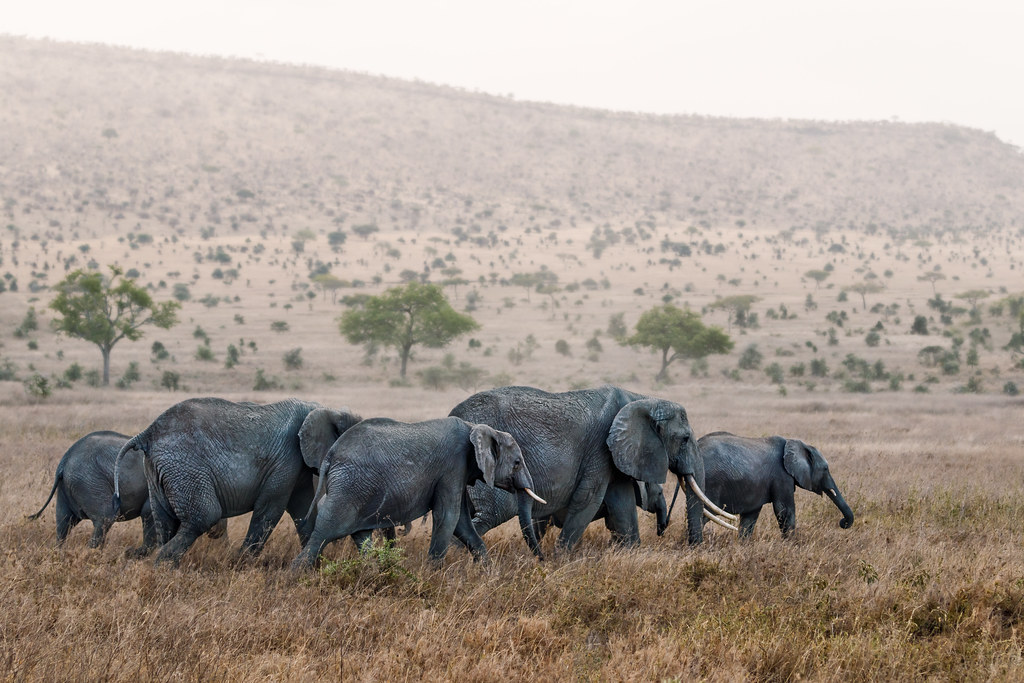
Tarangire National Park hosts the largest concentration of elephants in Tanzania during the dry season. The total Tarangire ecosystem elephant population is estimated at 3,000 to 4,000 individuals, but this population disperses widely across the surrounding Maasai steppe and the community lands outside the park during the wet season when water and grass are distributed across the landscape.
As the dry season progresses from June onward, the Tarangire River — which holds permanent water in defined pools along its course through the park — becomes increasingly attractive as the surrounding landscape dries out. By August the concentration of elephants at the Tarangire River has reached its peak: herds of 100 to 500 individuals at the major river pools (particularly the Silale swamp in the south of the park and the Boundary Hill area in the north), with smaller family units of 10 to 30 elephants at every accessible water point along the 90-kilometre course of the river through the park.
The self-drive game drive along the Tarangire River track from the park entrance gate south to the Silale area takes a full day at normal game drive speed (approximately 8 hours from gate open to gate close, 60 to 70 kilometres of driving in each direction), with elephant herds encountered continuously throughout the drive in the dry season months.
The morning light on the elephant herds at the river pools, with the ancient baobab trees providing the visual backdrop that no other Africa elephant habitat matches, produces photography that is immediately recognisable as Tarangire in a way that few other Africa park landscapes achieve. The elephant families at Tarangire are well-habituated to vehicles, allowing the standard vehicle approach distance of 10 to 20 metres from the main herd for extended observation without alarm response.
Tarangire's elephant population includes some of the largest-tusked individuals still surviving in Tanzania, as the park's relative protection from ivory poaching compared to the open steppe regions has allowed older males to survive and grow their tusks to the full lengths possible without human interference. The park's mature bull elephants, which tend to be solitary or in small bachelor groups separate from the breeding herds, are occasionally found at the permanent waterholes with impressive tusk length and girth visible clearly from a vehicle parked at the waterhole bank. The Tarangire wetlands are also associated with high crocodile density in the permanent river sections, and the contrast between the drinking elephant herds and the Nile crocodile basking on the opposite bank a few metres away is a uniquely Tarangire combination of large animals in close proximity that plays out daily at the Silale swamp and the Gurusi waterhole areas.
The Baobab Landscape: Ancient Trees of the Tarangire
The baobab trees (Adansonia digitata) of Tarangire National Park are the largest and most ancient in northern Tanzania and form the defining visual character of the park in a way that no other single species defines any other East Africa national park. Individual baobab trees at Tarangire have been dated or estimated at between 500 and 2,000 years old, with the oldest specimens having reached their maximum height of 20 to 25 metres and maximum trunk circumference of 10 to 15 metres.
The baobab's characteristic inverted-appearance (a thick, bottle-shaped trunk, relatively short branches, and a canopy that looks like roots reaching skyward when leafless in the dry season) gives the Tarangire landscape a primeval, timeless quality that is heightened by the human and animal life that congregates around these ancient trees: bee-eater colonies nesting in the old termite mounds adjacent to the baobab roots, lilac-breasted rollers and hornbills perching on the bare dry-season branches, elephant using the baobab trunk as a scratching post or eating the bark for its moisture content and minerals.
The baobab bark damage visible on the oldest trees is the result of decades or centuries of elephant use: large sections of bark stripped from the trunk expose the pale, spongy wood beneath which the elephant chew for moisture during periods of extreme dry-season stress. Despite the apparent damage, the baobab's extraordinary resilience means that most trees survive centuries of elephant use, and the relationship between elephant and baobab is one of the longest-standing co-evolutionary partnerships in the Tarangire ecosystem.
The photographic potential of the Tarangire baobab landscape is highest in the dry season when the trees are leafless and the silhouette shapes are most dramatic against the pale dry-season sky, and lowest in the wet season when the trees are fully leafed and blend into the general green landscape.
Tarangire Circuit Logistics and Bird List
Tarangire National Park is reached from Arusha in approximately 2 to 2.5 hours via the A104 highway south toward Dodoma to the Makuyuni junction (90 kilometres from Arusha on good tarmac), then 7 kilometres on the park access road to the Engikaret gate. The gate opens at 6 am and closes at 6:30 pm. TANAPA fees must be pre-paid online at tanapa.go.tz before gate arrival.
The park's internal road network covers approximately 200 kilometres of accessible murram tracks, with the main Tarangire River circuit the most productive for elephant and lion, and the Silale swamp circuit in the southern park (an additional 2 to 3 hours' drive south of the main entrance area) the highest elephant concentration point in the peak dry season.
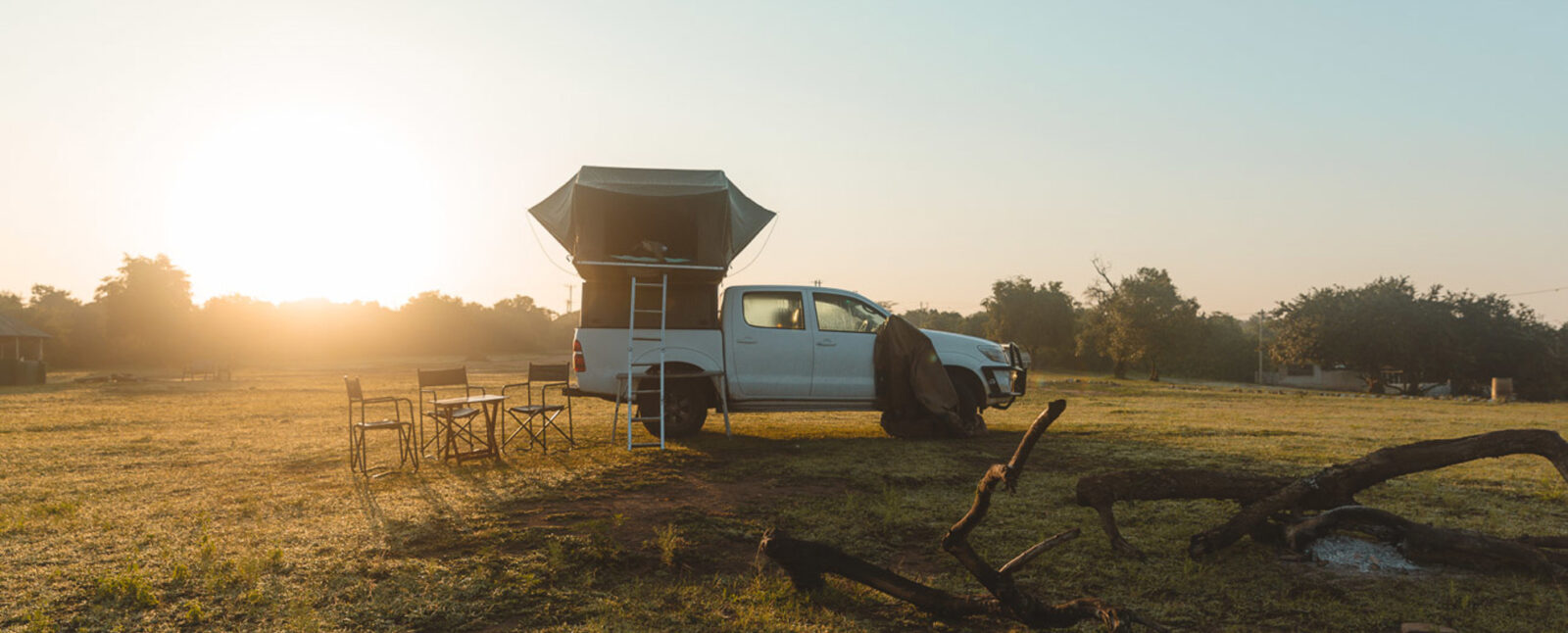
Tarangire has a public campsite near the park entrance gate maintained by TANAPA, and several private camps in the northern and central areas. A 2 to 3 night stay at Tarangire is the minimum to cover the main areas of the park. Tarangire's bird list of over 500 species is the most diverse in the Tanzania northern circuit: the Eurasian migrants present from October to April swell the total, and the dry-season concentration of birds at the river pools produces the most productive birding sessions.
The park's speciality birds include the Ashy starling (endemic to central Tanzania), the yellow-collared lovebird (a parrot species endemic to Tanzania), the rufous-tailed weaver, and the Maasai ostrich on the open savannah plains. For vehicle hire from Arusha, see the Tanzania car rental page. For TANAPA fee pre-payment, see the Tanzania practical information page.
For the complete Tanzania northern circuit itinerary, see the Tanzania northern circuit complete guide. To make a vehicle hire enquiry for the Tarangire elephant trail, use the book now page.
Tarangire in the Wet Season: An Entirely Different Experience
Tarangire National Park in the wet season (November to May) is a fundamentally different landscape from the dry-season elephant concentration that makes Tarangire famous, and the wet-season Tarangire has specific appeals that make it a valid destination outside the peak dry months for visitors who understand what to expect. In the wet season, the Tarangire River water flows strongly through the park, the seasonal swamps and pans fill with water, and the flat landscape of the central park floods in the low-lying areas to create temporary lakes and wetlands that did not exist in the dry season.
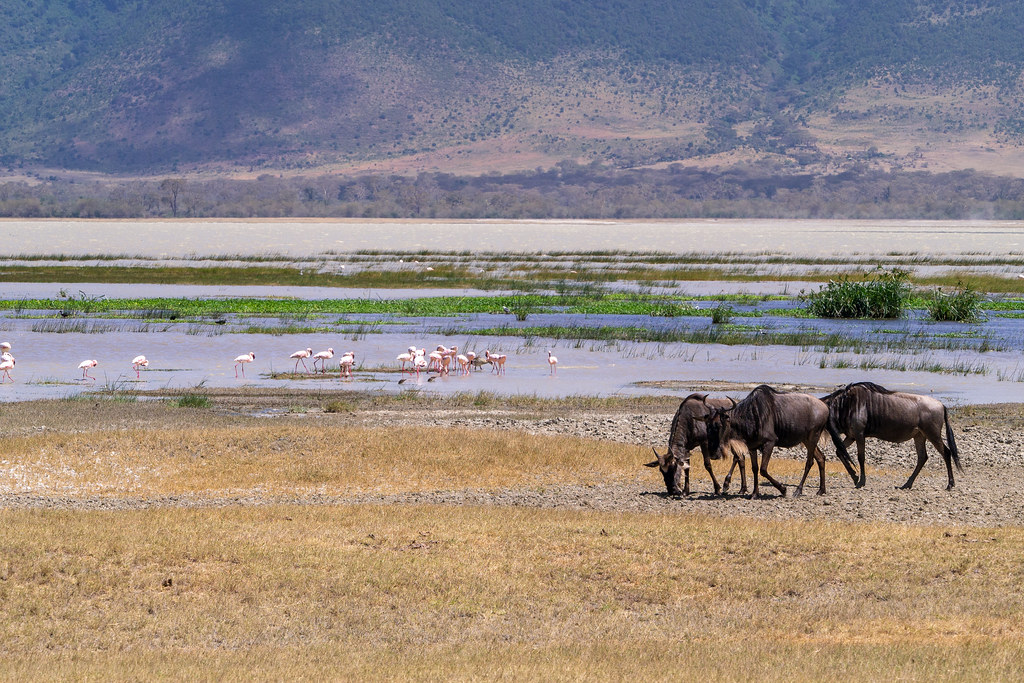
The wildlife disperses from the Tarangire River throughout the park and into the surrounding ecosystem as water becomes available everywhere: the elephant herds spread out across the bush country in smaller family groups, the wildebeest, zebra, and the mixed gazelle herds that concentrate at the river in the dry season scatter over a much larger area, and the predators follow the prey into the more densely vegetated interior.
The net effect is lower game drive density per kilometre than the dry season but a more varied and less predictable game drive experience as the visitor does not know in which section of the park the dispersed wildlife will concentrate on a given day. The wet season Tarangire is the optimal period for the resident bird community: approximately 150 of Tarangire's 500+ bird species are Palaearctic migrants present only from November to April (largely waders, raptors, and passerines from Europe and Central Asia), and the short-rains and long-rains periods bring the highest birding species counts of the year.
The baobab landscape in the wet season, when the trees carry their full leaf and the fresh green of the wet-season vegetation contrasts with the grey trunk and the canopy, has a completely different aesthetic from the dry-season silhouette landscape and is equally worth photographing. Tarangire's public campsite near the entrance gate is significantly less occupied in the wet season, and the game drive tracks in the northern half of the park are accessible to the Toyota Land Cruiser Prado in the wet season; the southern Silale area tracks require the V8 with diff lock in the wettest months (April and May) when the black cotton soil in the low-lying sections becomes impassable for the Prado.