
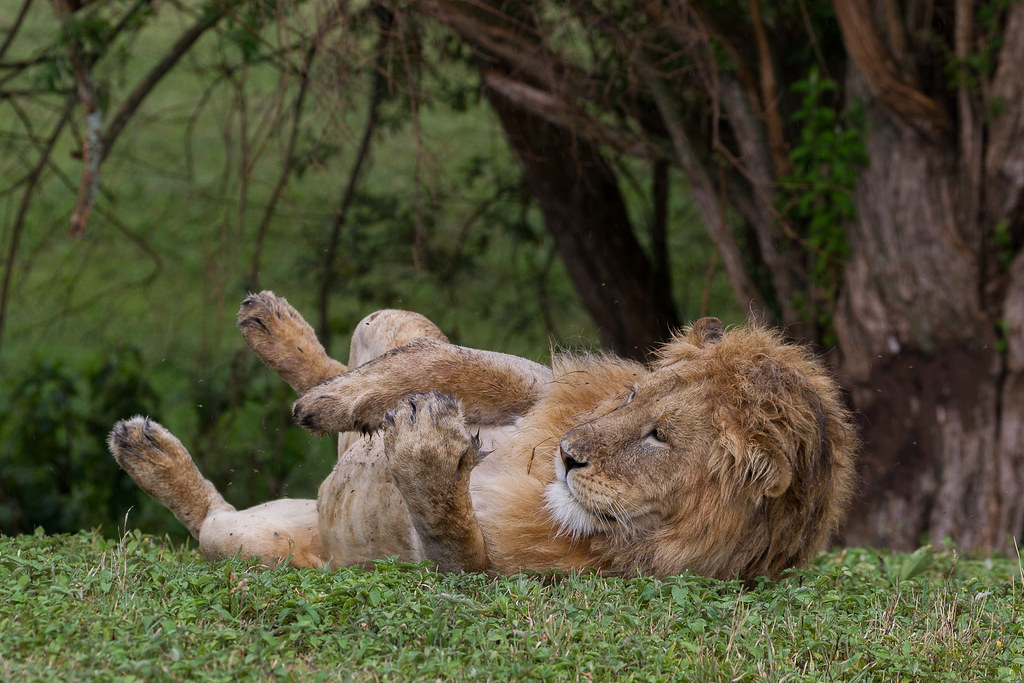
Uganda Ishasha sector self-drive — the southern section of Queen Elizabeth National Park, separated from the main Mweya sector by 60km of unsealed road and containing the park's famous tree-climbing lion population — is one of the most specific and rewarding detour destinations on the Uganda safari circuit. The Ishasha tree-climbing lions are a genuine wildlife phenomenon: unlike the tree-climbing lions of Queen Elizabeth's Kasenyi sector (which occasionally climb trees), the Ishasha lion prides have developed a cultural tradition of resting in the branches of the large Ficus natalensis fig trees that dominate the Ishasha woodland — the fig tree branches provide elevated temperature regulation, shade, and escape from the dense ground-level tsetse fly activity. The Ishasha sector self-drive circuit visits 2 to 3 known fig tree clusters where the lion prides rest most consistently. This guide covers the Ishasha sector self-drive for 2027/2028 visitors.
The Ishasha Tree-Climbing Lion Fig Tree Circuit
- Start time: The fig tree circuit is most productive in the early morning (6am to 9am) when the lions are returning from the night's hunting and resting in the lower branches. Midday visits are less reliable — the lions may be in denser cover.
- The main fig trees: The 3 to 4 specific Ficus natalensis trees most consistently used by the resident prides are known to the Ishasha sector rangers. Ask the ranger at the Ishasha gate (15km from the Rwindi/Kabatoro main road junction) for the current pride location when entering.
- Circuit distance: The full Ishasha woodland circuit is approximately 20 to 30km of unsealed track through the fig woodland and grassland. Allow 2 to 3 hours for the circuit.
- Sighting probability: 65 to 75% on any morning visit. The tree-climbing behaviour is most reliably observed in the cooler months (June to August).
Ishasha Sector Additional Wildlife
Planning your East Africa self-drive circuit? Car Hire 4x4 Drive provides fully-equipped 4x4 vehicles for Uganda, Kenya, Tanzania, and Rwanda with COMESA insurance and cross-border documentation included. See how the booking process works or send a circuit enquiry for a quote within 24 hours.
- Hippo (Ishasha River): the Ishasha River forms the Uganda/Congo DRC border — large hippo pod visible from the river bank viewing area
- Buffalo: large herds on the open grassland south of the fig woodland
- Uganda kob: the Ishasha grasslands have good kob populations
- Elephant: occasionally seen in the eastern sector of Ishasha — less frequent than in the Mweya sector
Getting to Ishasha: The Approach Road
- From Mweya (north Queen Elizabeth): 90km via Kasese and Kikorongo — 2 to 2.5 hours on mixed tarmac and unsealed road
- From Bwindi Impenetrable Forest (Buhoma): 90km via Kihihi — 2 to 2.5 hours on unsealed road
- 4x4 recommended for both approaches in any season; mandatory in wet season
Frequently Asked Questions
Do I need 4WD for a self-drive safari in East Africa?
4WD is essential for any circuit that includes the Ngorongoro Crater descent (which requires centre differential lock), the Bwindi Impenetrable approach road in wet season, or Kidepo Valley National Park. For circuits that stay on sealed national highways and well-maintained murram roads in dry season, a capable 2WD vehicle can manage — but the Toyota Land Cruiser V8 GX with full 4WD and diff lock is always the safest and most reliable choice for any East Africa circuit.
What documents do I need to drive across East Africa borders?
You need the COMESA Yellow Card insurance certificate (valid for all East Africa Community member states), a cross-border authority letter from the vehicle owner for each transit country, and the vehicle registration document. Car Hire 4x4 Drive prepares all cross-border documentation for the specific countries on your circuit as part of the standard hire process — no separate arrangement needed.
Can I self-drive in East Africa without previous off-road experience?
Yes. Most East Africa self-drive circuits do not require technical off-road skills — the majority of the driving is on sealed national highways or well-maintained murram park roads. The vehicle handover at collection includes a full demonstration of the 4WD system. If your circuit includes genuinely technical sections (Ngorongoro crater descent, Bwindi wet-season approach), consider a car with driver for those sections if you have no prior 4WD experience.
How far in advance should I book my East Africa self-drive vehicle?
Book 4 to 8 weeks in advance for standard circuits. For July–August peak season (wildebeest migration) and December–January, book 3 to 4 months ahead. Rwanda gorilla permits should be booked 3 to 9 months in advance via the RDB portal; Uganda gorilla permits (Bwindi) should be booked 2 to 6 months ahead via UWA. See the full FAQ and the How It Works page for the complete booking process.
Which vehicle is best for a multi-country East Africa circuit?
The Toyota Land Cruiser V8 GX is the standard recommendation for any circuit covering two or more countries, or any circuit that includes Tanzania (Ngorongoro is mandatory 4WD with diff lock) or Uganda's challenging approach roads (Bwindi, Kidepo). For Kenya-only or Rwanda-only dry-season circuits, the Land Cruiser Prado is a cost-effective alternative. For groups of 6 or more passengers, the Toyota Hiace 9-seater safari van with pop-up roof is the most cost-effective per-person option.