
The Nyerere National Park self-drive is one of Tanzania’s most underrated independent safari options — a 4-hour drive from Dar es Salaam to the world’s largest national park (50,000 square kilometres), where the Rufiji River’s floodplain and oxbow lakes support extraordinary wildlife including African wild dog packs, large lion prides, and hundreds of elephant. Nyerere (formerly the Selous Game Reserve) was rebranded as a national park in 2019 and now charges TANAPA entry fees for the photographic tourism zone (the original northern sector around Mtemere gate). The Nyerere National Park self-drive is more accessible than its size suggests — the Mtemere gate area (the main self-drive zone) covers a manageable 200 to 300 square kilometre circuit along the Rufiji River and the lake system, with excellent boat safari options on the river itself. This guide covers the complete Dar es Salaam to Nyerere drive, the Mtemere circuit, and the boat safari booking for self-drive visitors.
Dar es Salaam to Nyerere Mtemere Gate (300km, 4 hours)
Depart Dar es Salaam on the southern Kilwa Road, following the coast south to Kibiti junction (180km, 2.5 hours). At Kibiti, turn west on the murram road toward Mloka village (70km, 1.5 hours). The Nyerere National Park self-drive Mtemere gate is 10km west of Mloka — the final approach through the Rufiji floodplain woodland is outstanding: elephant, giraffe, and large buffalo herds are often visible on the road before the gate. Fill fuel completely in Kibiti (the last reliable fuel before the park) and carry 20 litres spare for the park circuit driving.
Nyerere Mtemere Circuit: The Wildlife and the Roads
Planning your East Africa self-drive circuit? Car Hire 4×4 Drive provides fully-equipped 4×4 vehicles for Uganda, Kenya, Tanzania, and Rwanda with COMESA insurance and cross-border documentation included. See how the booking process works or send a circuit enquiry for a quote within 24 hours.
The Nyerere National Park self-drive Mtemere circuit covers the Rufiji River north bank, several oxbow lakes (Lake Manze, Lake Siwandu, Lake Nzerakera), and the open miombo woodland north of the river. Key wildlife:
- African wild dog: Nyerere (Selous) holds one of Africa’s largest wild dog populations — between 800 and 1,200 dogs distributed across the vast reserve. The Mtemere circuit has regular wild dog pack sightings — packs of 8 to 20 dogs hunting impala on the open woodland. Wild dog sightings here are more reliable than in most East Africa parks.
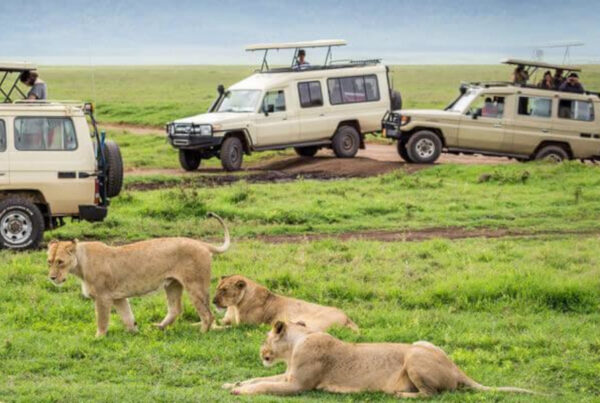
- Lion: Large miombo woodland-adapted lion prides of 15 to 25 individuals. The Nyerere lions are less vehicle-habituated than Serengeti or Masai Mara lions but are regularly located by park rangers on the morning circuits.
- Elephant: Very large herds (Nyerere-Ruaha ecosystem supports over 13,000 elephants) — enormous family groups of 30 to 60 elephants crossing the Rufiji River floodplain are regularly encountered.
- Hippo and crocodile: The Rufiji River holds one of Africa’s densest hippo populations — the boat safari provides close-range hippo encounters that are impossible on the road circuit alone.
Nyerere Boat Safari: The Essential Add-On
The Rufiji River boat safari is the defining activity at Nyerere National Park — the river system provides access to hippo pods, Nile crocodile on the sand banks, African skimmer colonies, and occasional lion seen drinking at the river edge from the boat. The boat safari departs from the Mtemere ranger station or from the private lodge jetties (Jimbiza and Siwandu camps both operate boat safaris for guests). For self-drive Nyerere visitors: book the boat safari at the Mtemere TANAPA ranger office. Cost: approximately USD 25 to 40 per person for a 2-hour boat trip. Timing: morning boat trips (6:30am to 8:30am) are the most productive — hippo are more active in the early morning and the light is excellent for photography.
Entry Fees: Nyerere National Park (2027/2028)
- Adult entry: USD 29 per person per 24 hours (TANAPA rate — lower than Serengeti or Ngorongoro)
- Vehicle entry: USD 40 per vehicle per day
- Campsite: TANAPA Mtemere public campsite, approximately USD 30 per person per night
A 4×4 is essential for circuits that include the Ngorongoro Crater descent (which requires centre differential lock), the Bwindi Impenetrable Forest approach road in wet season, or Kidepo Valley National Park. For circuits that stay on sealed national highways and well-maintained murram roads in dry season a capable 2WD can manage — but the Toyota Land Cruiser V8 GX with full 4WD and diff lock is always the safest and most reliable choice for any East Africa self-drive circuit.
You need a valid driving licence (plus an International Driving Permit if your licence is not in English), the COMESA Yellow Card insurance certificate, a cross-border authority letter from the vehicle owner for each transit country, and the vehicle registration document. Car Hire 4×4 Drive prepares all cross-border documentation for the specific countries on your circuit as part of the standard hire process — no separate arrangement needed.
Yes. Most East Africa self-drive circuits do not require technical off-road skills — the majority of driving is on sealed national highways or well-maintained murram park roads. The vehicle handover at collection includes a full demonstration of the 4WD system. If your circuit includes genuinely technical sections such as the Ngorongoro Crater descent or Bwindi wet-season approach, a car with driver can be arranged for those sections if you have no prior 4WD experience.
Book 4 to 8 weeks in advance for standard circuits. For July to August peak season and December to January, book 3 to 4 months ahead. If your circuit includes gorilla trekking, Uganda permits via UWA should be booked 2 to 6 months ahead and Rwanda permits via the RDB 3 to 9 months ahead — the vehicle booking should align with confirmed permit dates. See the How It Works page for the complete booking process and deposit schedule.
The Toyota Land Cruiser V8 GX is the standard recommendation for any circuit covering two or more countries, or any circuit including Tanzania (Ngorongoro requires mandatory 4WD with diff lock) or Uganda’s challenging approach roads. For Kenya-only or Rwanda-only dry-season circuits the Land Cruiser Prado is a cost-effective alternative. For groups of 6 or more passengers, the Toyota Hiace 9-seater safari van with pop-up roof is the most cost-effective per-person option.

 Do you believe in Road trips?