The East Africa 4x4 hire vehicle kit bag — the collection of recovery and camping equipment that should accompany every self-drive safari hire vehicle — contains items that many first-time visitors have never seen or used before. Understanding what each item in the hire vehicle's kit bag is for, and how to use it, before the safari begins prevents the failure mode where a visitor is stuck in Murchison Falls mud holding a recovery board with no idea what to do with it. This guide covers every standard item in the East Africa self-drive kit bag, explains its function, and gives brief usage notes for 2027/2028 hire vehicle visitors.
Recovery Equipment: What Each Item Does
- Recovery boards / traction boards (MaxTrax, ARB tracks, or similar): Flat boards with moulded directional teeth. Placed under a spinning tyre to give traction in mud, sand, or loose soil. Usage: dig enough mud from around the trapped tyre to slide the board under the tyre; drive slowly forward at low RPM until the tyre clears the soft section.
- Hi-lift jack (farm jack): A tall mechanical ratchet jack that lifts the vehicle high enough to place recovery boards or pack material under a sunk wheel. Different from a standard hydraulic car jack — it operates with a lever ratchet system and requires a flat base plate in mud. Never place the hi-lift jack foot on soft ground without the base plate.
- Kinetic (snatch) recovery strap: A stretchy recovery strap (bright orange, usually 9m to 11m long) designed to store energy like a rubber band — the recovering vehicle accelerates gently, the strap stretches and then releases its stored energy as a jerk-free pull that extracts the stuck vehicle. NOT a static tow rope — using it for towing at speed will damage it.
- D-shackles (bow shackles): High-strength steel U-shaped shackles that connect the kinetic strap to recovery points on the front and rear of the vehicle. Always use proper rated recovery points — never the tow ball or plastic bumper.
- Shovel (folding): For clearing mud from around stuck tyres before placing recovery boards. Also useful for building a level surface for the hi-lift jack base.
Camping Equipment in the Kit Bag
Planning your East Africa self-drive circuit? Car Hire 4x4 Drive provides fully-equipped 4x4 vehicles for Uganda, Kenya, Tanzania, and Rwanda with COMESA insurance and cross-border documentation included. See how the booking process works or send a circuit enquiry for a quote within 24 hours.
- 12V compressor fridge/cooler: connects to the vehicle's 12V socket or secondary battery. Most Land Cruiser hire vehicles have a dual-battery system that powers the fridge from a dedicated leisure battery, not the starter battery.
- Portable kitchen: 2-burner gas cooker, gas canister, cooking pots, utensils, plates, cutting board. Check gas canister level at vehicle collection.
- Water carrier (20L jerry can): for camp water in parks with no running water. Fill before entering the park.
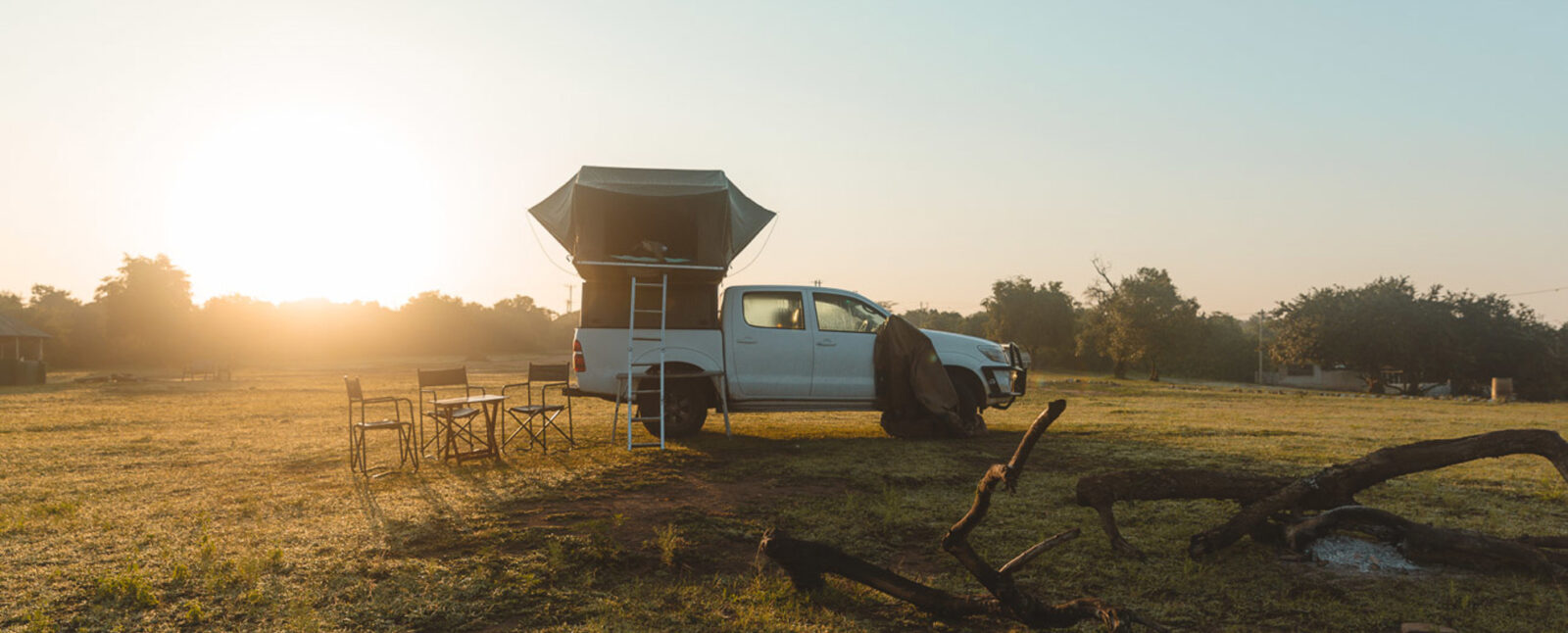
- Roof tent ladder: check the ladder's latch mechanism at vehicle collection — some older ladders have worn latches that release unexpectedly
Frequently Asked Questions
Do I need 4WD for a self-drive safari in East Africa?
4WD is essential for any circuit that includes the Ngorongoro Crater descent (which requires centre differential lock), the Bwindi Impenetrable approach road in wet season, or Kidepo Valley National Park. For circuits that stay on sealed national highways and well-maintained murram roads in dry season, a capable 2WD vehicle can manage — but the Toyota Land Cruiser V8 GX with full 4WD and diff lock is always the safest and most reliable choice for any East Africa circuit.
What documents do I need to drive across East Africa borders?
You need the COMESA Yellow Card insurance certificate (valid for all East Africa Community member states), a cross-border authority letter from the vehicle owner for each transit country, and the vehicle registration document. Car Hire 4x4 Drive prepares all cross-border documentation for the specific countries on your circuit as part of the standard hire process — no separate arrangement needed.
Can I self-drive in East Africa without previous off-road experience?
Yes. Most East Africa self-drive circuits do not require technical off-road skills — the majority of the driving is on sealed national highways or well-maintained murram park roads. The vehicle handover at collection includes a full demonstration of the 4WD system. If your circuit includes genuinely technical sections (Ngorongoro crater descent, Bwindi wet-season approach), consider a car with driver for those sections if you have no prior 4WD experience.
How far in advance should I book my East Africa self-drive vehicle?
Book 4 to 8 weeks in advance for standard circuits. For July–August peak season (wildebeest migration) and December–January, book 3 to 4 months ahead. Rwanda gorilla permits should be booked 3 to 9 months in advance via the RDB portal; Uganda gorilla permits (Bwindi) should be booked 2 to 6 months ahead via UWA. See the full FAQ and the How It Works page for the complete booking process.
Which vehicle is best for a multi-country East Africa circuit?
The Toyota Land Cruiser V8 GX is the standard recommendation for any circuit covering two or more countries, or any circuit that includes Tanzania (Ngorongoro is mandatory 4WD with diff lock) or Uganda's challenging approach roads (Bwindi, Kidepo). For Kenya-only or Rwanda-only dry-season circuits, the Land Cruiser Prado is a cost-effective alternative. For groups of 6 or more passengers, the Toyota Hiace 9-seater safari van with pop-up roof is the most cost-effective per-person option.